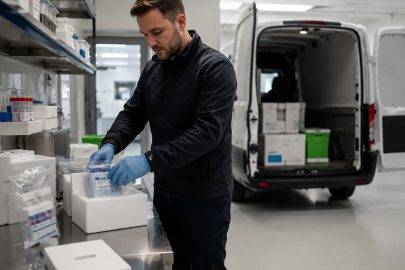
A live animal shipment cannot be handled like a box, pallet, or standard freight shipment. The journey has to be planned around what is being transported, where it is going, when it needs to arrive, and how the receiving facility will handle the delivery.
For research laboratories, pharmaceutical companies, biotechnology organizations, and testing facilities, transportation is often one part of a much larger operation. A shipment may need to move between two research facilities, arrive within a defined receiving window, or reach a laboratory in time for scheduled testing.
That makes the transportation plan just as important as the final destination.
So, how are live animals shipped? What affects the cost and delivery time? What should a laboratory prepare before pickup? And what should you look for in a transportation provider?
The answer starts with one principle: live animal transportation requires planning, precision, and reliable coordination from pickup through delivery.
Key Takeaways
Can you ship live animals?
Yes, live animals can be transported through specialized transportation services. The appropriate approach depends on the type of shipment, pickup and delivery locations, journey duration, environmental considerations, and requirements of the receiving facility.
Unlike conventional parcel delivery, live animal transportation requires the entire journey to be considered in advance. Pickup timing, route planning, transportation conditions, delivery coordination, and communication can all influence the outcome.
For research organizations, shipments may move between laboratories, universities, testing facilities, pharmaceutical research sites, biotechnology companies, and other research locations.
The National Academies emphasizes the importance of journey planning for laboratory animal transportation, including considerations around transit time, environmental conditions, handling, and coordination between facilities.
How are live animals shipped?
A successful live animal shipment begins well before the vehicle arrives at the pickup location.
The sending facility and transportation provider need to establish where the shipment is coming from, where it is going, when it needs to arrive, and what conditions need to be considered during the journey.
Plan the shipment
The first step is to establish the pickup location, destination, preferred delivery timeframe, shipment requirements, and contacts at both facilities.
Coordinate pickup
The transportation team works with the originating facility to arrange the pickup and confirm that the necessary information is available before departure.
Plan the route
The route should account for distance, expected travel time, traffic, delivery windows, and potential disruptions. The fastest route on paper is not always the most practical option for a time sensitive shipment.
Coordinate delivery
The receiving facility should know when the shipment is expected and have the appropriate personnel available. This simple step can prevent unnecessary waiting when the vehicle reaches its destination.
Maintain shipment visibility
Tracking and clear communication give the sending and receiving teams greater visibility while the shipment is in transit.
The objective is to manage the shipment as one coordinated journey rather than treating pickup and delivery as separate events.
How to ship live animals safely
Safe transportation starts with removing avoidable uncertainty from the journey.
A well planned shipment considers what could happen between pickup and delivery. Traffic, weather, facility schedules, environmental conditions, and unexpected delays can all affect transportation.
The National Academies recommends careful planning of laboratory animal journeys, with attention to transit time and environmental conditions.
For a research shipment, that means looking beyond the vehicle itself.
The route should be selected with the expected journey time in mind. The receiving facility should be ready before the shipment leaves the origin. Environmental requirements should be discussed during planning, particularly when weather or longer travel times could affect transportation conditions.
Communication matters throughout the journey as well. When a laboratory knows the status of an important shipment, its team can prepare for arrival instead of waiting for an unexpected delivery.
This is where logistics precision makes a practical difference. The goal is not simply to move a shipment from one address to another. It is to create a predictable transportation process from pickup through final delivery.
How much does it cost to ship live animals?
There is no single price for live animal transportation. The cost depends on the requirements of each shipment.
Distance is one factor, but it is only part of the calculation. Pickup and delivery locations, transportation requirements, delivery timing, route complexity, number of animals, and additional coordination requirements can all influence the final cost.
A local shipment between two facilities can have very different requirements from a time sensitive shipment traveling between states.
When requesting a quote, provide:
- Pickup location
- Delivery location
- Preferred transportation date
- Required delivery window
- Number of animals
- Environmental requirements
- Special transportation considerations
- Contact information for the sending and receiving facilities
The more complete the shipment information, the easier it is for a logistics provider to assess the route and develop an appropriate transportation plan.
How long does live animal transportation take?
Transportation time depends on the shipment and route.
Distance, traffic, pickup schedules, delivery windows, facility operating hours, environmental considerations, and transportation requirements can all affect the total journey.
For research organizations, the delivery window can be especially important. A laboratory may have personnel scheduled to receive a shipment or a research activity planned around its arrival.
For that reason, the right transportation plan is not necessarily the one that simply promises the shortest journey. It is the one that balances the route, timing, facility requirements, and reliability of execution.
For time sensitive shipments, Neonline Logistics evaluates the transportation requirements and coordinates an appropriate solution based on the requested route and timeframe.
How to schedule live animal transportation
Scheduling specialized transportation starts with having the right information available.
A research facility should provide the pickup and delivery addresses, preferred date, required delivery window, number of animals, transportation requirements, and contact details for the facilities involved.
Any restrictions around pickup or receiving hours should be communicated before the shipment is scheduled.
From there, the logistics provider can coordinate the vehicle, route, pickup, delivery, and communication plan.
For urgent requirements, early communication can give the logistics team more options when developing the transportation plan.
Common challenges when shipping live animals
Live animal transportation presents challenges that standard freight does not.
Unpredictable travel conditions
Traffic, weather, road conditions, and route changes can affect the expected journey. Careful route planning and active shipment monitoring can help the logistics team respond when conditions change.
Missed receiving windows
A shipment arriving when the receiving facility is unavailable can create unnecessary delays. Confirming the receiving window before pickup helps avoid this problem.
Environmental changes
Long journeys and changing weather conditions can affect the transportation environment. These factors should be discussed before transportation begins so they can be incorporated into the plan.
Time sensitive research
When transportation is connected to laboratory testing or scheduled research activity, timing becomes a critical part of the logistics requirement.
Limited shipment visibility
A lack of communication can leave the sender unsure about where a shipment is or when it is expected to arrive. GPS enabled vehicles and real time shipment visibility give customers greater awareness during transit.
Neonline Logistics provides specialized live animal transportation for laboratories, pharmaceutical, and biotechnology facilities, with dedicated TSA certified drivers, real-time shipment visibility, route coordination, and scheduled, same-day, rush, or customized delivery options.
How to choose a live animal transportation company
Price should not be the only consideration when choosing a transportation provider.
Research facilities should look at the provider’s experience with specialized transportation, geographic coverage, vehicle capabilities, shipment visibility, communication process, and ability to manage time sensitive requirements.
A strong logistics partner should understand the shipment before pickup and remain involved through delivery.
At Neonline Logistics, precision is built into every stage of transportation. Our team focuses on planning, communication, documentation, route coordination, shipment monitoring, and delivery confirmation.
Our dedicated drivers and GPS equipped vehicles provide real time visibility, while our logistics team coordinates transportation around each customer’s requirements.
Our broader transportation capabilities include same day delivery, Rush Courier Service, Next Flight Out, expedited freight, door to door delivery, white glove delivery, and customized transportation solutions.
Live animal transportation for laboratories and research facilities
For research organizations, live animal transportation can be part of a much larger laboratory logistics operation.
Animals may need to move between research institutions, testing laboratories, universities, pharmaceutical companies, biotechnology organizations, and other research facilities.
Consider a laboratory that needs live mice delivery for lab testing in the USA. The transportation requirement may involve moving the shipment between facilities in different cities or states while coordinating the delivery around the receiving laboratory’s schedule.
The logistics provider needs to understand the route, timing, facility requirements, environmental considerations, and communication requirements before the shipment begins.
The National Academies highlights journey planning, transit time, environmental conditions, handling, and coordination between sending and receiving institutions as important considerations in laboratory animal transportation.
For these shipments, transportation becomes part of the research supply chain. The objective is to make the movement predictable, visible, and carefully coordinated.
Live animal transportation for pharmaceutical and biotechnology research
Pharmaceutical and biotechnology organizations often work across multiple research locations. A transportation requirement may therefore involve laboratories, testing facilities, research campuses, and other specialized destinations.
Reliable logistics can help these organizations coordinate time sensitive movements while keeping the sending and receiving teams informed.
Neonline Logistics supports specialized transportation where timing, shipment visibility, secure handling, and precise execution are important.
Whether transportation is scheduled in advance or requires an expedited solution, the process starts with understanding the route, delivery timeframe, and requirements of the facilities involved.
Temperature considerations during live animal transportation
Environmental conditions can influence how a live animal shipment should be planned.
Weather, temperature fluctuations, journey duration, vehicle conditions, and loading and unloading times may all need to be considered before transportation begins.
Research transportation guidance identifies protection from environmental extremes as an important consideration when transporting laboratory animals.
For this reason, environmental requirements should be communicated during the planning stage. The transportation provider can then incorporate those requirements into the route and transportation plan.
Why choose neonline logistics for live animal transportation?
On time delivery is expected. Precision is what sets great logistics apart.
At Neonline Logistics, precision is built into every stage of our operations. From the moment a shipment is scheduled to the final confirmation of delivery, our experienced team focuses on planning, communication, documentation, and execution.
Our capabilities include:
- Reliable on time deliveries
• Experienced logistics professionals
• Real time shipment visibility
• Secure handling procedures
• Customer focused communication
• Mission critical transportation
• Precision driven operations
Our fleet includes automobiles, cargo vans, and box trucks with liftgates. GPS equipped vehicles provide real time visibility, while dedicated drivers support scheduled, same day, rush, and customized transportation requirements.
For Neonline, timely delivery is the minimum standard. What defines the service is the precision, accountability, and consistency behind every shipment.
When your research operation depends on logistics, every detail matters.
Reliable Live Animal Transportation Starts With Precision
When live animal transportation is part of a laboratory or research operation, reaching the destination is only one part of the job.
The shipment needs to be planned accurately, monitored during transit, and coordinated with the people expecting it.
Neonline Logistics combines experienced logistics professionals, dedicated drivers, GPS enabled vehicles, real time shipment visibility, and carefully coordinated transportation to support specialized and time sensitive delivery requirements.
For scheduled, same day, rush, or customized transportation requirements, contact Neonline Logistics to discuss your shipment.